Person Record
Metadata
Name |
Fleming, Alexander |
Born |
1799 |
Birthplace |
Scotland |
Places of residence |
Scotland Vaughan Township Lot 10, Concession 6, Derby Township, Grey County, "Springfield Farm" |
Nationality |
Scottish |
Notes |
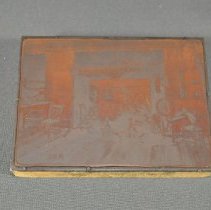
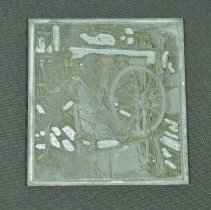
The Alexander and Jean (Stewart) Fleming family had emigrated from Perthshire, Scotland in 1843 to Vaughan Township, Canada West. They came to Canada because they wanted land for their six sons. They were too poor on arrival to buy their own land, so they made an arrangement with another resident of the township to clear his land and grow some food on it. C. A. Fleming erroneously wrote in later years that their twin sons, John and James Fleming, had purchased land at Lot 9 and 10, Concession 6 of Derby Township in 1847 from the land agent, John Telfer, and the two young men sent provisions and tools on ahead from Vaughan to the wharf at the Village of Sydenham (later called Owen Sound), and walked up to the village to collect these items and then moved them into the bush of Derby Township, where, by 1849, they had established a clearing and planted potatoes. A brother, Alexander (b. 1832) and sister Janet (aka Jessie) Fleming walked 140 miles to the Derby farm clearing in time to help dig the potatoes. The Alexander & Jean Fleming family finally left Vaughan altogether in January, 1850, when they moved their household goods and livestock and two pairs of oxens and sleighs and a horse and cutter over the ice on Caledon Mountain, and travelled on snowy terrain (the men had to shovel and break a trail). The Flemings arrived at Derby Township on Feb. 25, 1850, where the twins had previously established a clearing. [Roy Fleming's papers say that the Flemings settled in Derby Township in 1850]. At that time, Derby Township was part of the District of Wellington, as Grey County had not been created yet. An original document still owned by a descendant shows that it was actually not the twins who purchased the land, but it was their father, Alexander Fleming, who had purchased the land from the Crown Land Office at Elora on September 24, 1847. The purchase price was one hundred and fifty-seven pounds and 12 __, for lots 9 and 10 (197 acres each = 394 acres) in the 6th Concession of Derby Township. The land document was signed by Andrew Geddes, the District Agent, and a notation of 15 pounds, 5 shillings in scrip 2 pounds 12 shillings cash was made. ("Scrip", sometimes called soldier's scrip or land scrip, was issued by the Government as compensation to Loyalists, members of the militia and others. The notes had a nominal value of 51 (representing a unit of land) and could be sold to others for cash. The cash amount would be less than the face value of the allowance at current land prices. Alexander would have been buying the scrip at less than face value-perhaps substantially less, thus saving a good deal of money when he presented the scrip for Crown land). The Alexander and Jean Fleming (nee Stewart) log homestead was at Lot 10, Concession 6, Derby Township. The name "Springfield Farm" and "Springfield House" were used. The 1851-1852 log building was eventually torn down in 1901. Roy F. Fleming (b. 1878) captured its appearance in one of his drawings (put onto a printing plate), based on a photograph taken of the Fleming family's old hearth. The family had a spinning wheel, which was kept near the fireplace. The photographic image is shown in THE GREY COUNTY HISTORIAN article of Spring, 2018. There is also an 1898 illustration by Roy F. Fleming of the exterior of the "Springfield Farm" log house. The article also has a photograph of Alexander and Jean Fleming, photographed at Owen Sound by W. C. Cain. In the 1851 census, the household included__________. On March 1, 1856, Alexander became the postmaster there for $12 a year. The post office was called Kilsyth, after the name of the town on the Coatbridge Canal, from where the Flemings had left, en route to Glasgow, before they came to Canada. Alexander Fleming died in 1869 and was buried at _________. He was succeeded as Postmaster by ______________. The 9th and youngest child of the Alexander and Jean Fleming family was Jean Fleming (known as "Jennie"). She was born in Canada. She died at Owen Sound in 1942. |
Occupation |
Settler / Farmer / Post Office and Postmaster at Kilsyth |
Publications |
HISTORY OF DERBY TOWNSHIP, pp. 227-228 Vick, Dorothy, FROM QUILL TO BALLPOINT, 1988, has an entry re C.A. Fleming that provides details about Alexander and Jean's family, pp. 101-107 (however, please note that there are a couple errors in this account, please refer to William Fleming's account of the family's emigration and move to Grey County instead) Niall, Paula, "From Kirrandum to Kilsyth: The Story of the Alexander Fleming Family Who Emigrated from Scotland to Canada West in 1843", THE GREY COUNTY HISTORIAN, Spring 2018, Issue No. 39. This article provides a lot of detail about their life in Scotland and Vaughan. |
Relationships |
Some Descendants: Roy Franklin Fleming (b. 1878-d. 1958) C. A. Fleming (b. 1857-d. 1945) Bella Finch Herald (daughter of Isabella, grand-daughter of Alexander & Jean Fleming) T. Alfred Fleming George D. Fleming There is a thick Fleming geneaology at the Grey County Archives, and various other archival items. |
Role |
Farmer |
Spouse |
Jean Stewart, m. 1824 |
Children |
Isabella 1825 - 1917 m. Abraham Finch (1848) Janet (Jessie) 1828 - 1918 m. James Agnew John 1830 - 1909 m. Margaret Robertson James, twin of John 1830 - 1910 m. Grace Robertson (sister of Margaret) Alexander II 1832 - 1907 m. Ann Garvie (1855) Donald Fleming 1834 - 1896 m. Esther Flower William Fleming 1837 - 1927 m. Elizabeth Williams Charles Fleming 1840 - 1910 m. Eliza Warren Jean (Jennie) Fleming, born in Canada 1843 - 1942, died in Owen Sound, Jennie who never married was the only child born in Canada. Her journals of farm life are at the University of Guelph. |